Adopting auto steer for tractor technology significantly enhances operational efficiency and reduces operator fatigue, yet the high initial investment remains a primary barrier for many producers.
This 2026 guide assists budget-conscious farmers in navigating the evolving market, balancing performance with affordability to identify the best value solutions for their specific agricultural needs.
What Affects Tractor Auto Steering System Prices?
The price of a tractor auto steering system varies wildly, from a few thousand to tens of thousands of dollars. This disparity is driven by different technical and commercial factors.
1. Accuracy and Precision
The main factor affecting the tractor auto steering system price is accuracy. High-end RTK (real-time kinematic) systems deliver ±2.5 cm precision, crucial for planting, seeding, or strip-tilling.
These systems are more expensive due to advanced hardware. Lower-tier systems, using sub-meter GNSS corrections, are less accurate but significantly cheaper, suitable for general farming tasks or smaller farms.
2. Correction Signals and Base Stations
The type of correction signal also affects cost.
Free options:
l SBAS (e.g., WAAS, EGNOS): Free, sub-meter accuracy.
l Free PPP (e.g., Galileo HAS, BeiDou B2B): Can be ~10 cm accuracy, requires convergence time.
l Public CORS: Free RTK corrections in some countries, but coverage may be limited and less stable than paid RTK.
Paid options:
l Paid PPP (e.g., Trimble RTX): ±2.5 cm accuracy, faster convergence (as fast as 30 s).
l Commercial RTK: Reliable ±2.5 cm accuracy, consistent coverage, $600–$1,800/year per machine.
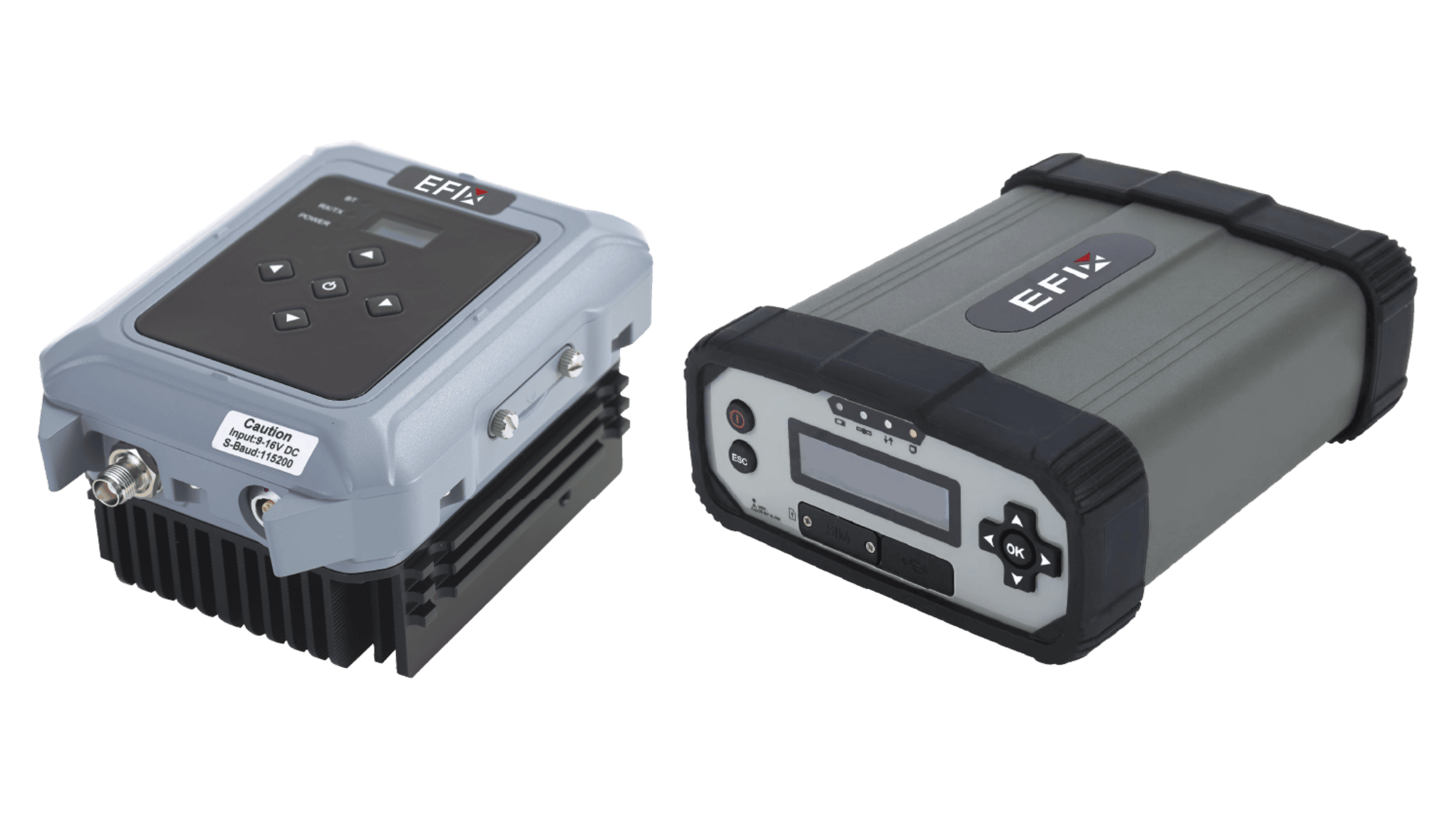
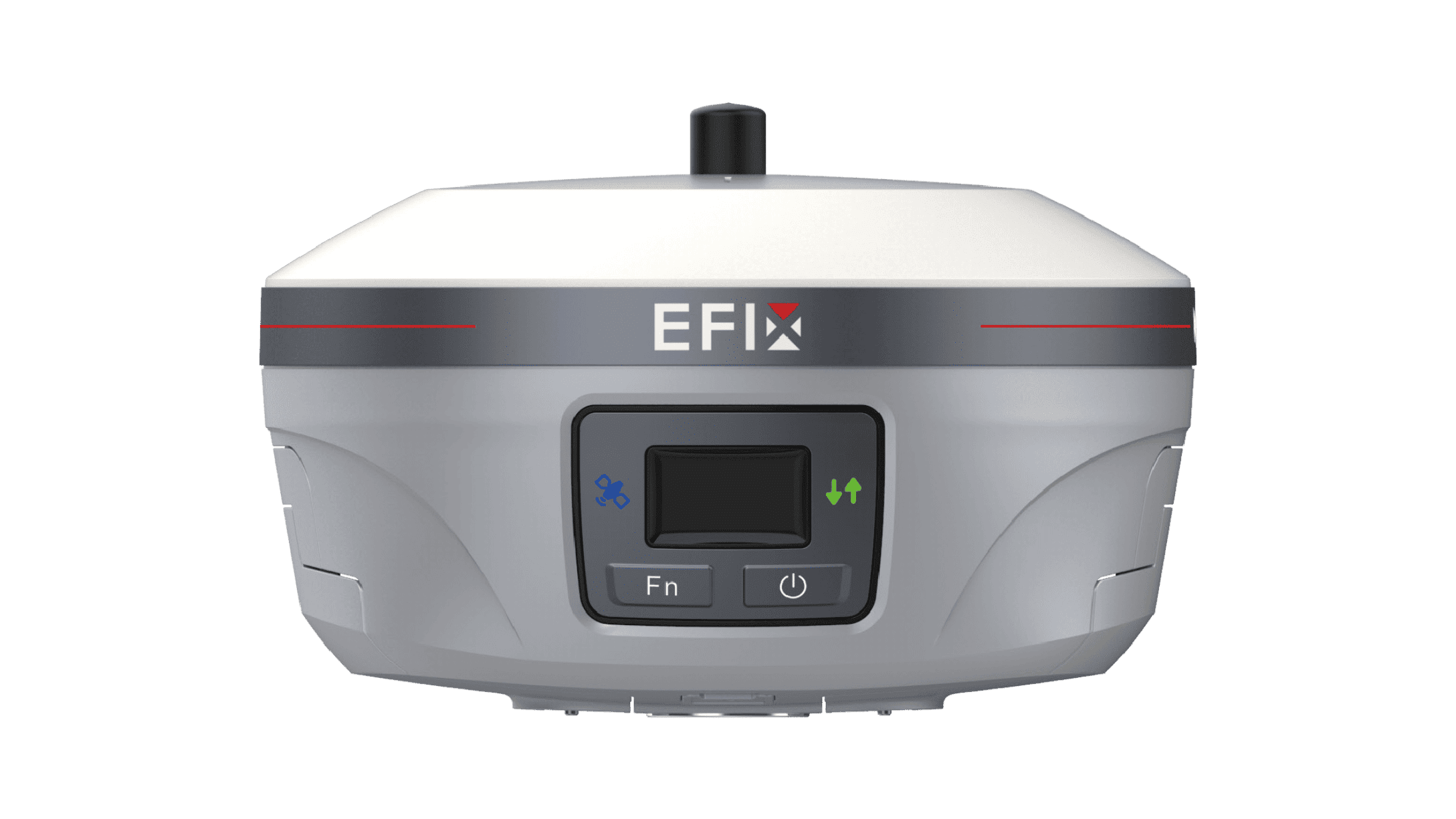
l Local base station: High upfront cost, but eliminates recurring RTK fees, ideal for large fleets.
3. Hardware and Steering Mechanism
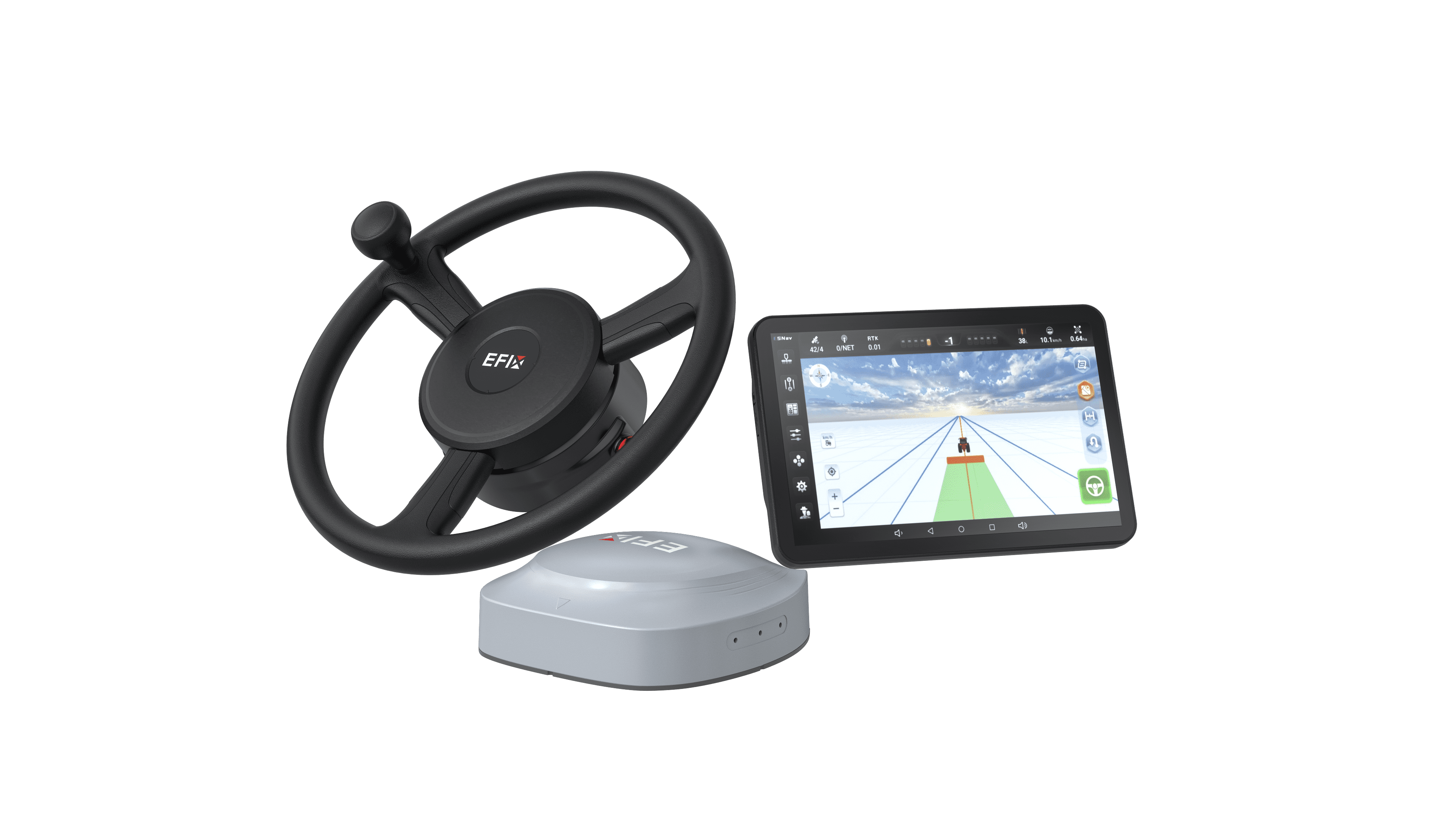
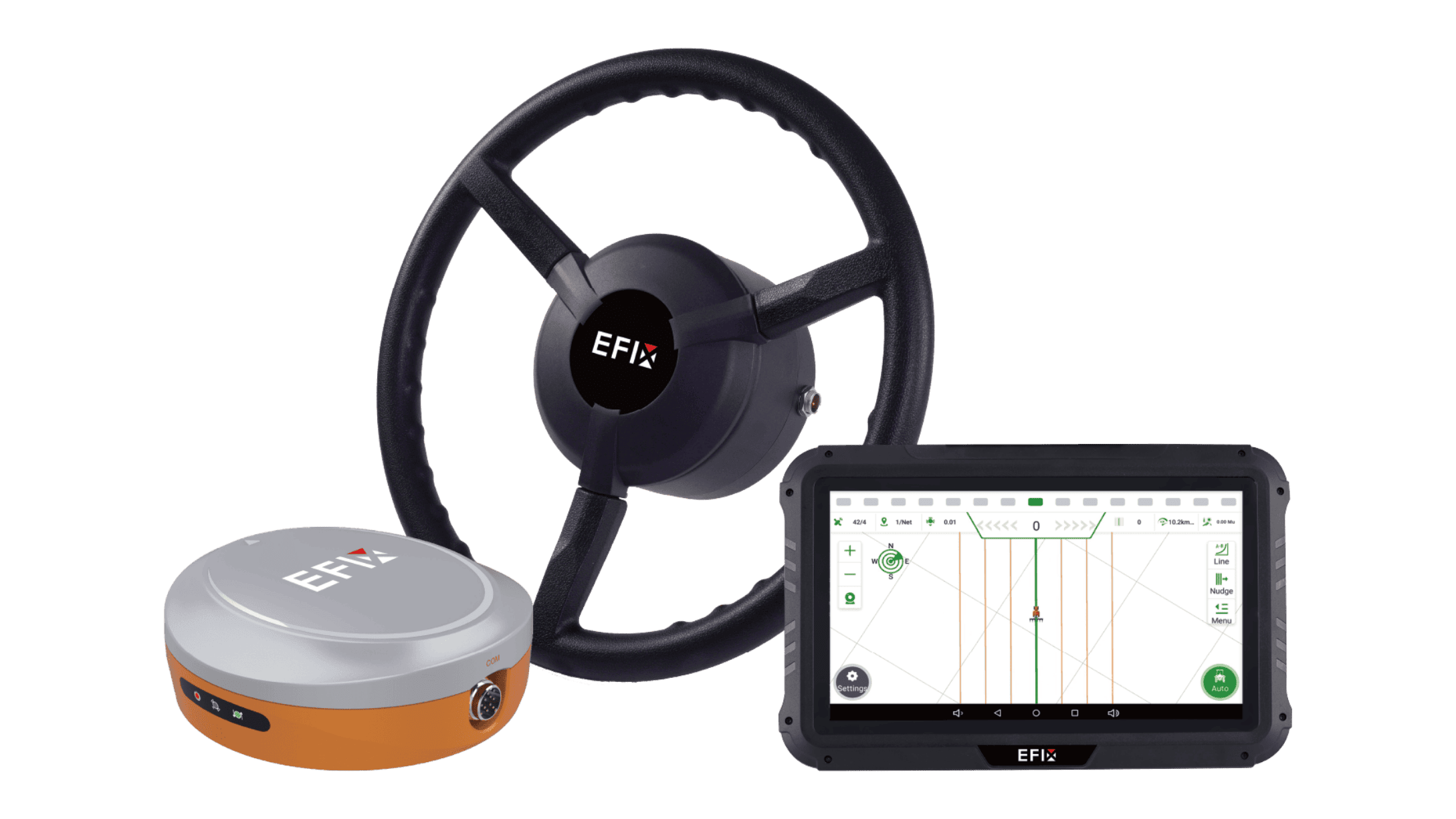
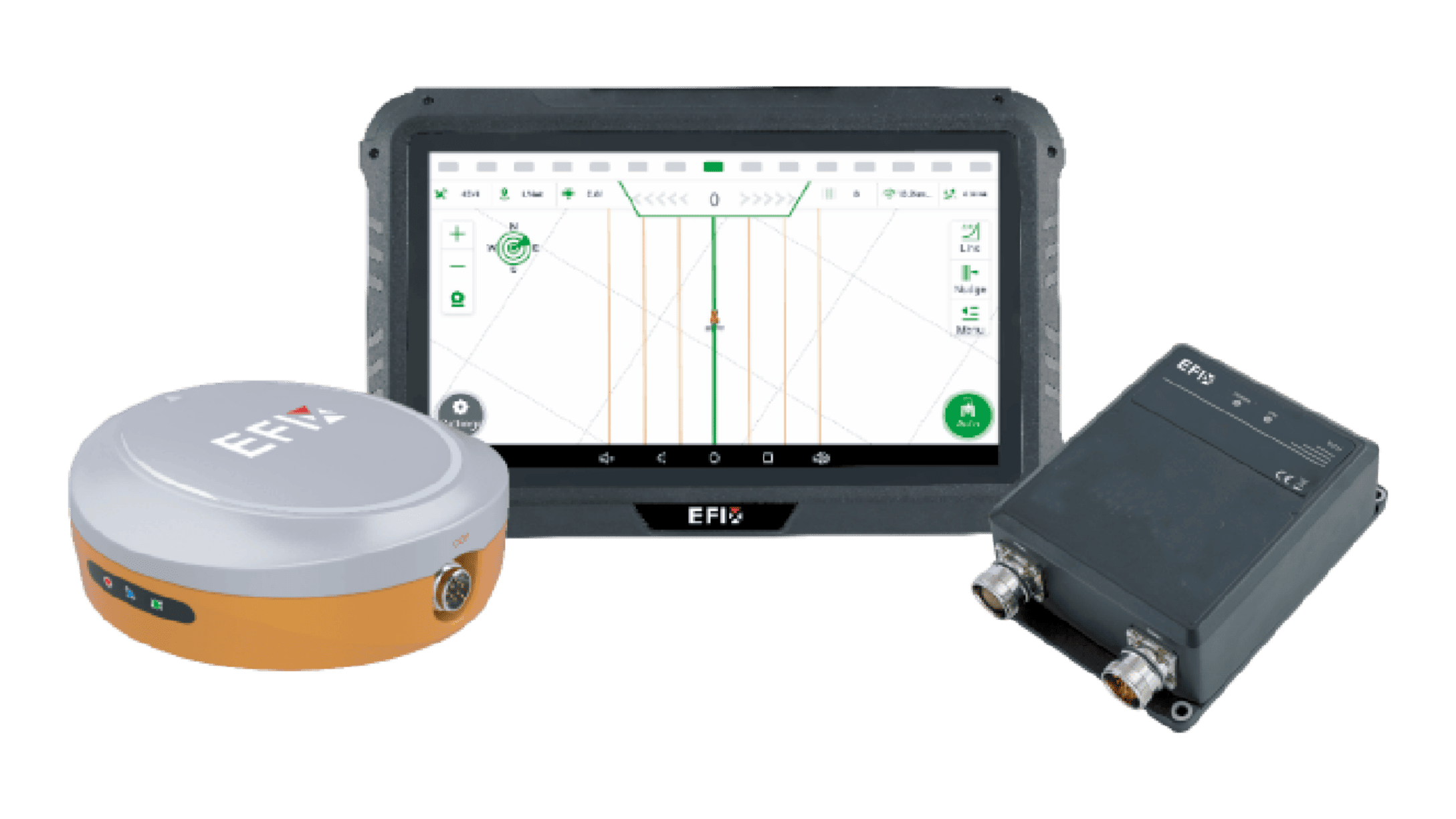
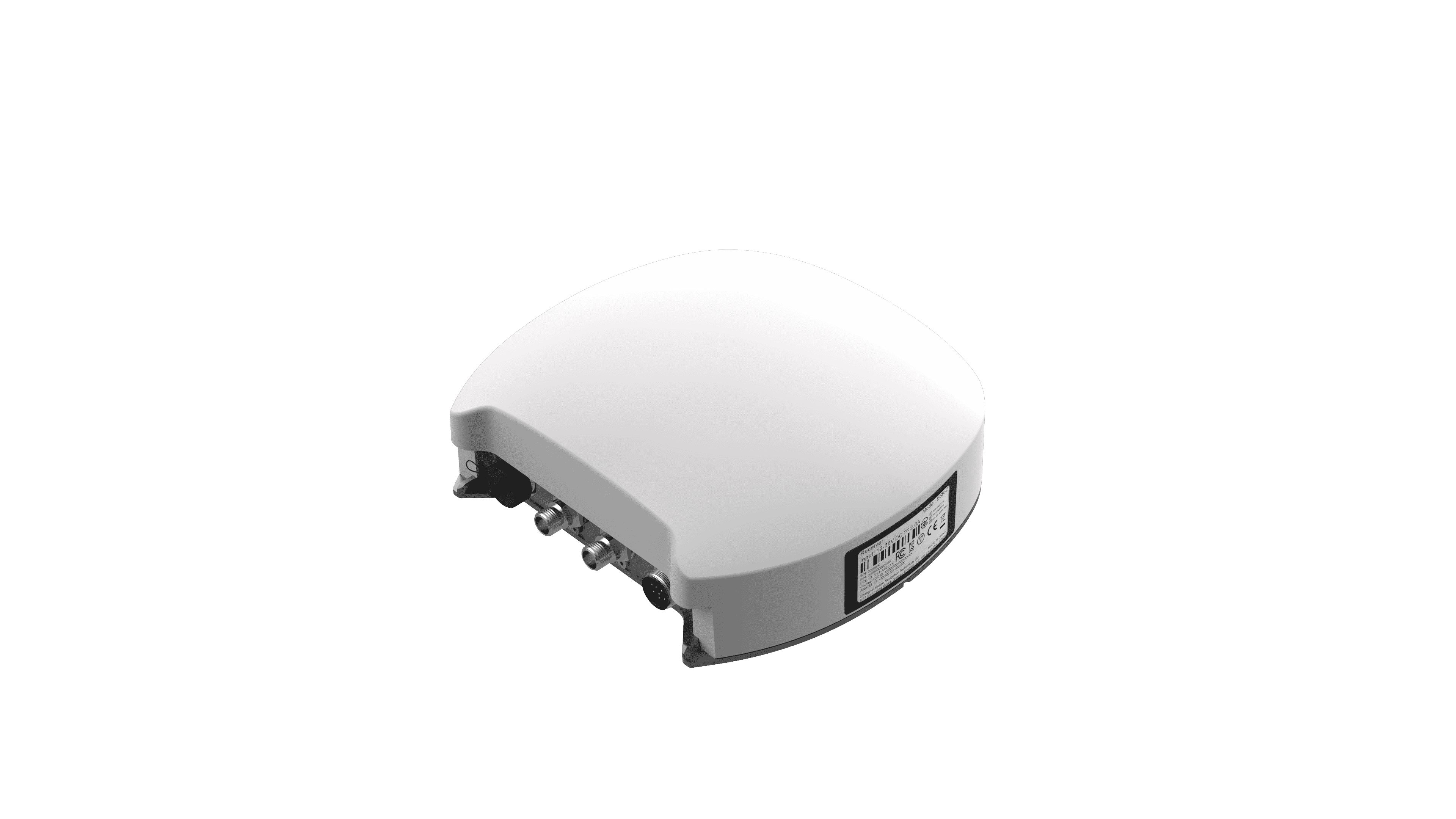
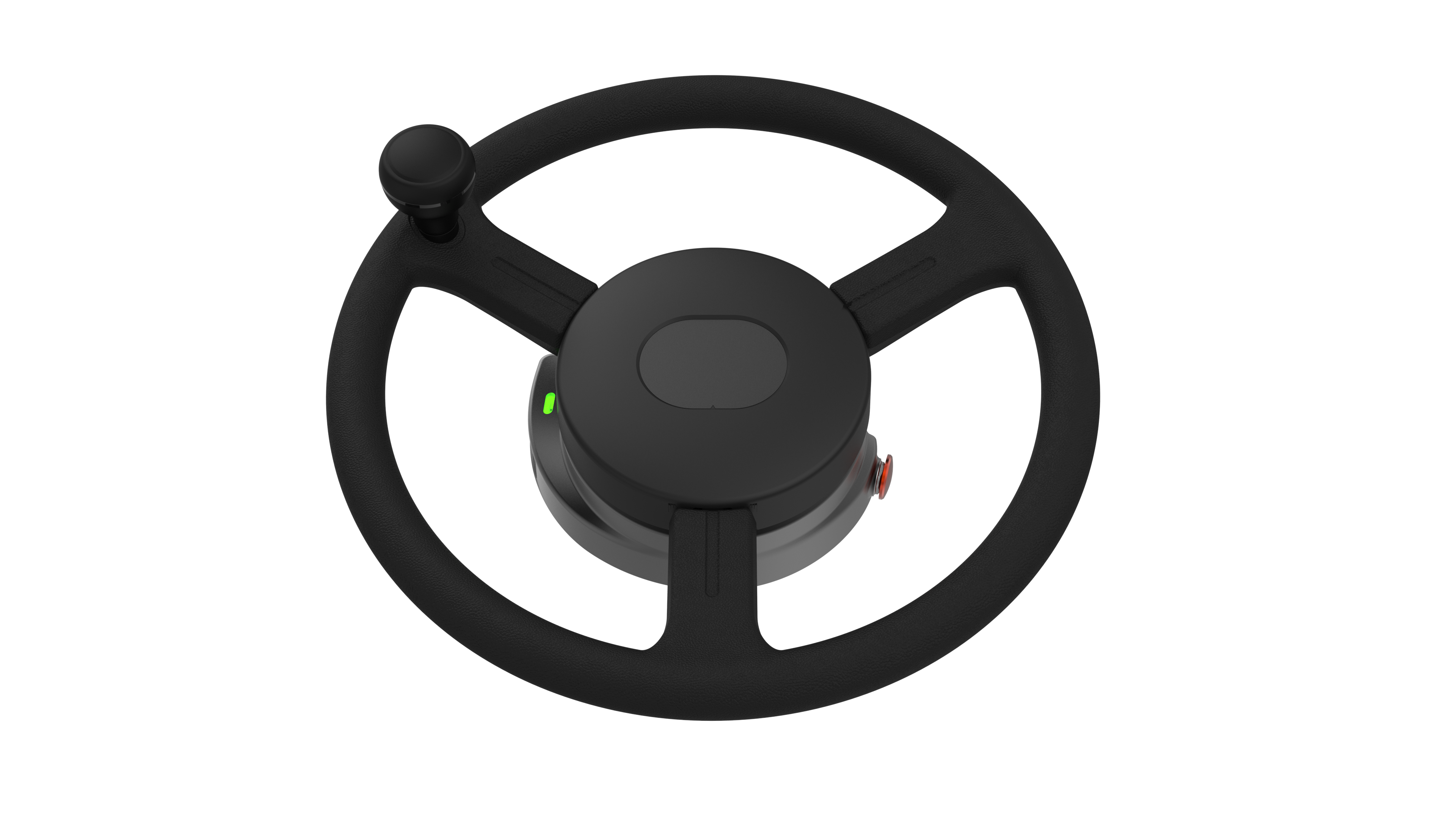
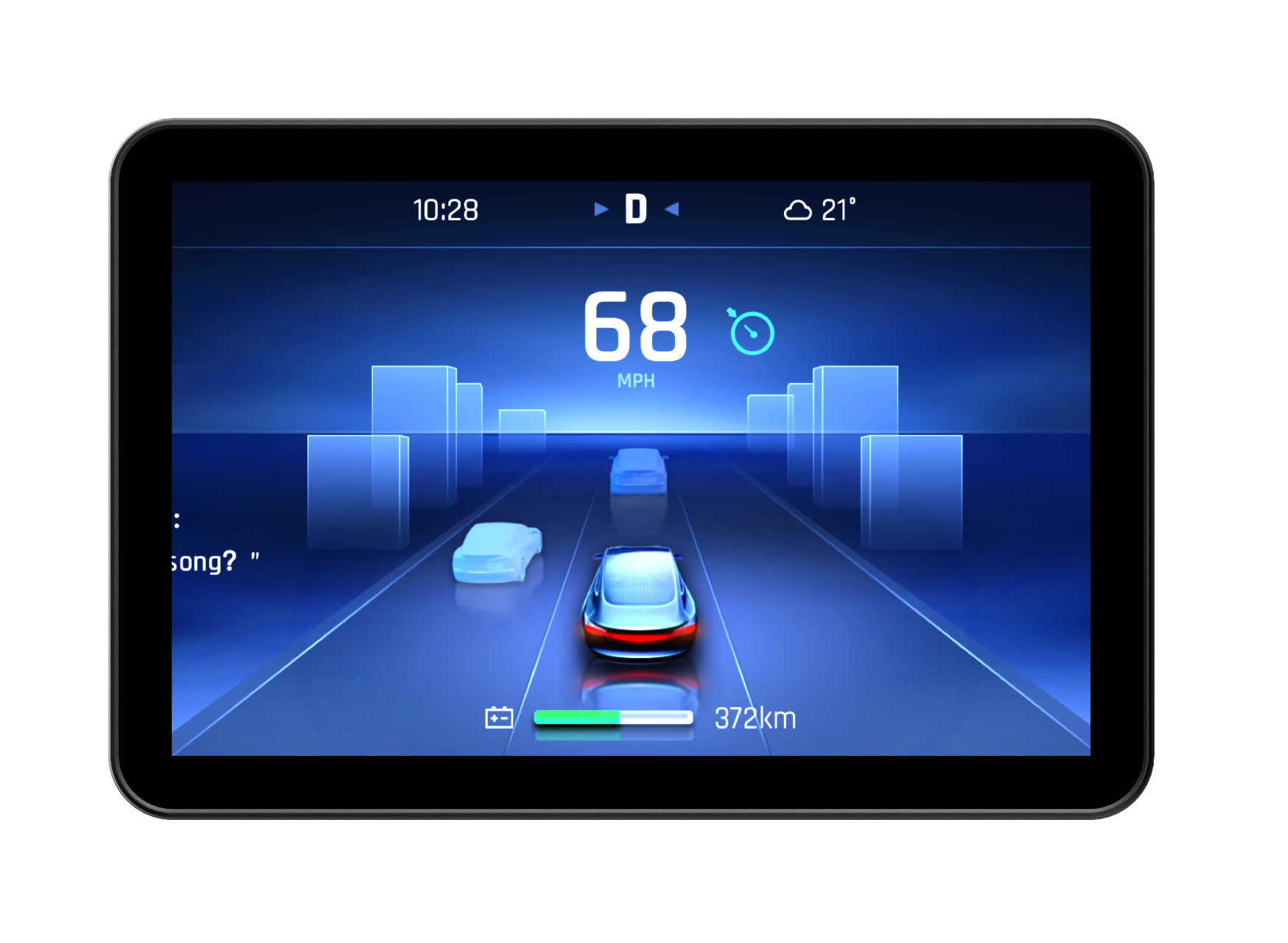
Hardware is another major factor. Manual guidance systems, which provide visual markers for drivers on a display, cost about $2,500–$5,000. Electric steering wheels, like the EFIX eSteer series, offer high-performance automated steering for about $5,000–$7,000 and are easy to transfer between tractors. Hydraulic retrofits provide smooth steering but are costly (could be $18,000+) and harder to install or move.
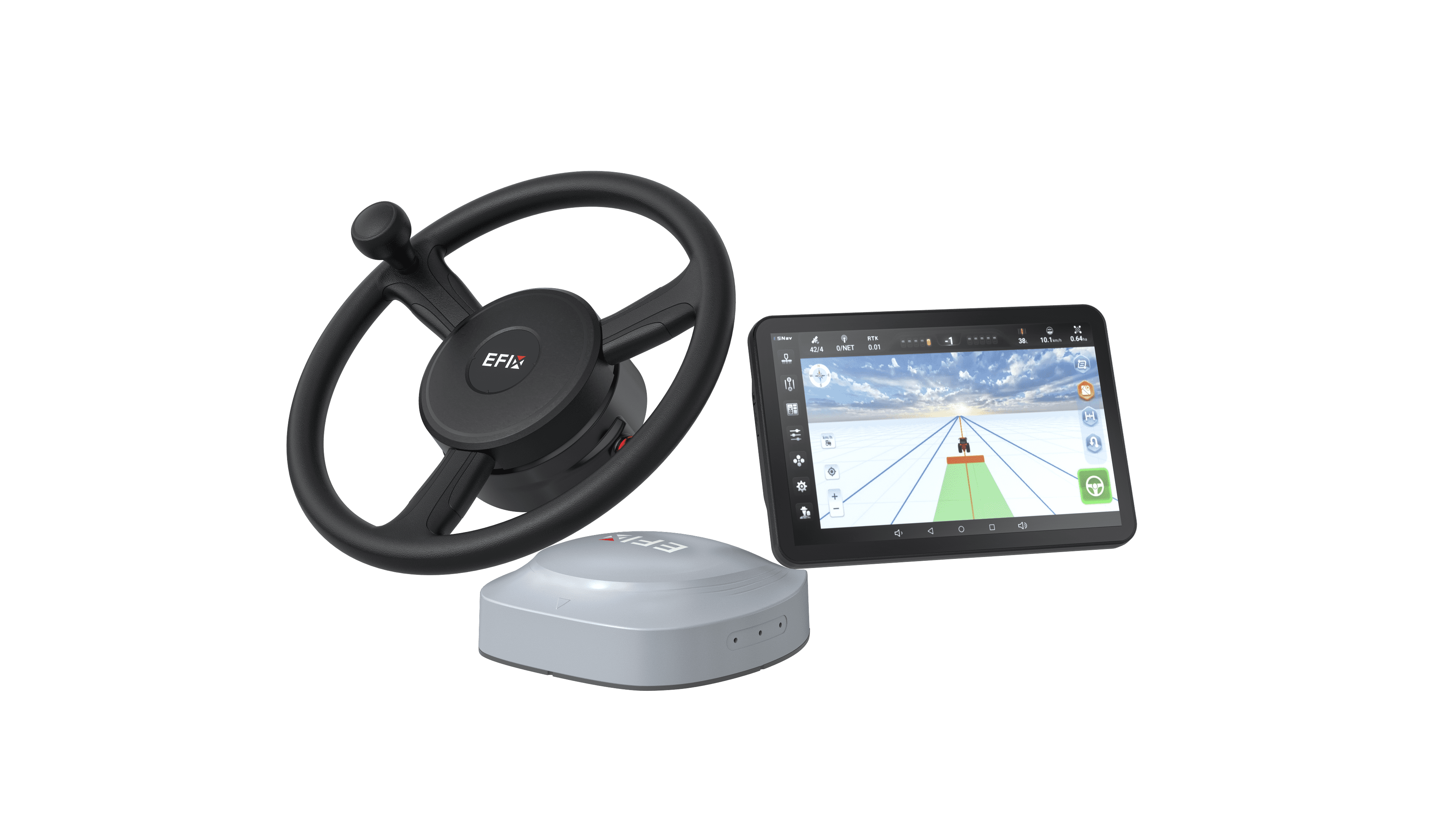
Picture shown: eSteer20 Max Auto Steering System
4. Software Features and Upgrades
Software capabilities, licenses, and upgrade paths contribute to overall costs. Many auto steer systems require extra payments to unlock features like ISOBUS compatibility, section control, or RTK use. Some brands offer free over-the-air updates, while others may charge for upgrades or additional licenses.
5. Brand and Quality
Brand reputation and build quality impact the price. Established OEMs may charge premiums for reliability and dealer support, but newer brands often match industrial standards with durable motors and waterproof components at competitive prices.
6. Maintenance and Total Cost
True cost extends beyond purchase and subscription fees. Durable materials reduce replacement costs, while user-friendly systems minimize technician visits. Systems requiring certified service for every calibration can increase long-term expenses, whereas remote diagnostics and robust design help control the total cost of ownership.
Top Affordable Auto Steer for Tractor in 2026
Here, we introduce two tractor auto-steer systems that combine affordability with high performance.
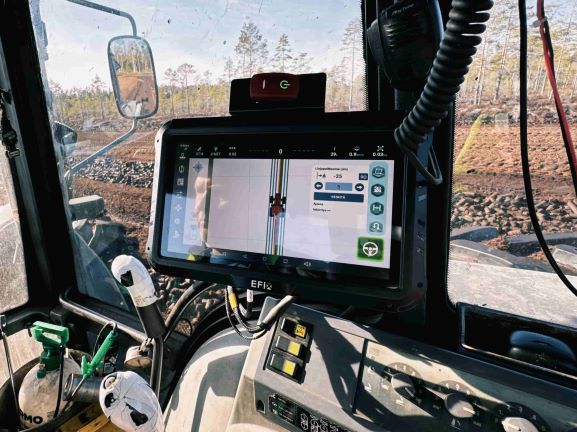
System Type: Electric-assisted auto steer for tractor
Accuracy: ±2.5 cm, 0.1–30 km/h
Key Highlights:
l Multiple U-turn modes: skipping, curve, boundary, headland
l Supports diverse GNSS modes: SPP, DGPS, RTK, H-PPP (Galileo E6-HAS)
l Versatile guidance patterns: AB straight, A+ line, curve, irregular rake, 90° lines
l Quick installation and intuitive software with one-click calibration
l AEF-certified ISOBUS UT & Section Control for implement integration
2. Trimble EZ-Steer with EZ-Guide 250
System Type: Friction wheel and motor auto steer
Accuracy: High-precision (terrain compensated)
Key Highlights:
l Compatible with 1,200+ tractor models, hands-free operation
l Terrain Compensation (T3) for slopes and rough ground
l Advanced turn & guidance: NextSwath™, OnSwath™, FreeForm™, Square Headlands
l Reduces operator fatigue, works day/night in low visibility or dusty conditions
l Easy integration with the tractor steering column, allows unrestricted manual override
Tips to Save Cost & Maximize Value for Tractor Auto Steer
Finding a cheap auto steer for tractor solution is not just about buying the lowest-priced hardware; it is about smart implementation. Here is how to maximize your budget in 2026.
1. Choose the Right Precision Level
Do not overbuy accuracy. Consider your farming operations and farm sizes. Generally speaking, if you mainly perform broad-scale tasks like tillage or mowing, you do not need 2.5 cm RTK accuracy. A sub-meter system using free correction signals will save you thousands of dollars in hardware and subscription fees. Reserve RTK investments for high-precision operations such as planting, spraying, or seeding where exact row spacing matters.
2. Use Free or Shared Correction Signals
Avoid proprietary satellite subscriptions if possible. Look for systems that support NTRIP. This allows you to connect to:
l State-run CORS networks: Many governments provide free RTK corrections over the internet.
l Community Bases: Look for local "Centipede" or "RTK2go" networks where farmers share their base station signals for free over the internet.
3. Start Small: Modular or Upgradeable Systems
If capital is limited, look for a scalable ecosystem. Start with a basic manual guidance bar (lightbar) that can be upgraded later. Ensure the display terminal you buy today is capable of driving an electric motor or hydraulic valve in the future. Buying a dead-end system that requires total replacement to upgrade is a false economy.
4. Consider DIY and Open-Source Solutions
For the tech-savvy farmer, the "AgOpenGPS" (AOG) project is a revolution. By sourcing your own PCBs, motors, and antennas, you can build an RTK system for even under $1,000.
l Pros: Lowest possible cost; total right-to-repair; active community support.
l Cons: High technical barrier. You must be comfortable with soldering, coding, and troubleshooting. There is no dealer number to call when the system fails during harvest.
5. Buy Smart: Used, Refurbished, and Budget Brands
The secondary market offers significant value. Used systems like the John Deere ATU or Trimble EZ-Steer can be found at 40-60% of their original price. Alternatively, consider "budget brands" that use tier-1 components but sell at aggressive price points. However, the lower price may also indicate their shortage in aspects like customer support, software updates, or advanced features.
6. Minimize Operating & Maintenance Costs
Look for systems with low operating expenses. Electric steering wheels generally require less maintenance than hydraulic systems due to fewer integrated and moving components. Avoid systems that require expensive dealer service calls for simple calibration or firmware updates—user-serviceable systems save thousands over the tractor's life.
7. Maximize Return on Investment (ROI)
To justify the tractor auto steering system price, use the data efficiently. Don't just steer; manage. Use the system's ISOBUS capabilities for section control to automatically shut off sprayer nozzles or planter rows in headlands. This data-driven approach typically saves 5-15% or even more on input costs, often paying for the entire system within two seasons.
Why Choose EFIX?
For growers seeking reliable value in the auto steer for tractors, EFIX stands out with a portfolio that includes affordable auto steering systems without compromising precision.
Backed by 1,000+ R&D engineers, 200+ software copyrights, and deployment in 140+ countries, EFIX delivers consistent ±2.5 cm accuracy across diverse working conditions.
Beyond standard products, EFIX offers localized service, on-site support, comprehensive documentation, and video training to reduce downtime and ownership costs.
Open OEM and integration options, ISO-certified manufacturing, and self-developed satellite correction services further reflect EFIX’s mission to democratize precision farming—helping farmers achieve more with less waste, less uncertainty, and lower long-term costs.
Conclusion
Choosing the right auto steer for tractors in 2026 is about aligning precision, cost, and long-term value. By understanding pricing drivers and selecting scalable, efficient solutions, farmers can achieve a strong ROI without overspending. For those seeking dependable performance and professional support, EFIX offers proven auto steering solutions—reach out to EFIX to explore the best fit for your operation!